Dusty again by tomorrow? Here’s how to reduce dust in house for good: damp-dust, HEPA-vacuum weekly, wash bedding hot, and keep humidity low. It’s mostly habit, not gadgets.
For more room-by-room habits, see our home wellness hub.
| Item | Value |
|---|---|
| Dust and vacuum frequency | Once or twice a week |
| Particles a HEPA vacuum filter removes | More than 99 percent of fine particles |
| Humidity where dust mites do well | Greater than 50% |
| Bedding wash | Every week, in hot water |
| Damp-mopping hard floors | Once a day |
| Empty the vacuum bag or canister | When it is half full |
These figures come from MyHealth Alberta and a Minnesota Department of Health video lesson. Guidance can change, so check the sources before you rely on the figures.
Why does dust keep coming back?
Dust is not just lint. A Harvard Healthy Buildings home guide calls it a reservoir for allergens from pests like dust mites, harmful chemicals and air pollution that settle onto the floor. The same page says the typical person ingests about 50 micrograms of dust per day, and up to 200 micrograms for kids.
Dust also moves around. Once it has settled on floors and sofas, it can be resuspended into the air when you walk around or sit down, according to the Harvard guide. That is why your cleaning method matters as much as how often you clean.
Dust mites add another layer. MyHealth Alberta says allergy to dust mites is a year-round problem, so a single seasonal clean will not hold.
Damp-dust first, then vacuum with HEPA
Start with the right cloth. State Farm’s guide says to avoid feather dusters and dry rags, which spread dust particles instead of capturing them. A damp cloth does better because, as a Minnesota Department of Health lesson explains, more of the dust adheres to the rag instead of circulating in the air. Pour your cleaner onto the cloth rather than spraying it into the air.
A few habits make dusting faster and more effective:
- Declutter first, because State Farm notes that more clutter equals more dust.
- Work from top to bottom, which makes it easier to collect the loose dust that floats down.
- Use a microfiber cloth for light dust, since it has an electrostatic charge that attracts dust, and a damp cloth for thick layers.
- Wipe the small things too: picture frames, books and knickknacks collect dust, so move them aside and clean underneath.
Vacuuming comes second, and the filter matters. The Minnesota lesson says HEPA vacuum filters remove more than 99 percent of fine particles, as stated on the state health department page. The Harvard guide warns that vacuums without HEPA may scatter dirt around your house.
Keep the machine healthy as well. The Minnesota lesson says to empty the bag or canister when it is half full so air keeps flowing, and to vacuum slowly with overlapping passes, including under furniture.
Cut down the fabrics that hold dust
MyHealth Alberta advises avoiding carpet, upholstered furniture and heavy drapes that collect dust. You do not need to gut your home; start with the bedroom, where you spend the most still hours.
- Rugs: remove wall-to-wall carpeting if you can, or take it out of the bedroom only, and use throw rugs you can wash.
- Windows: swap heavy drapes and blinds for roll-down shades or washable curtains.
- Furniture: choose wood, plastic, leather or vinyl that you can wipe clean.
- Bedroom clutter: clear out stuffed toys, wall hangings, books, knickknacks and artificial flowers, and skip wool blankets and down quilts.

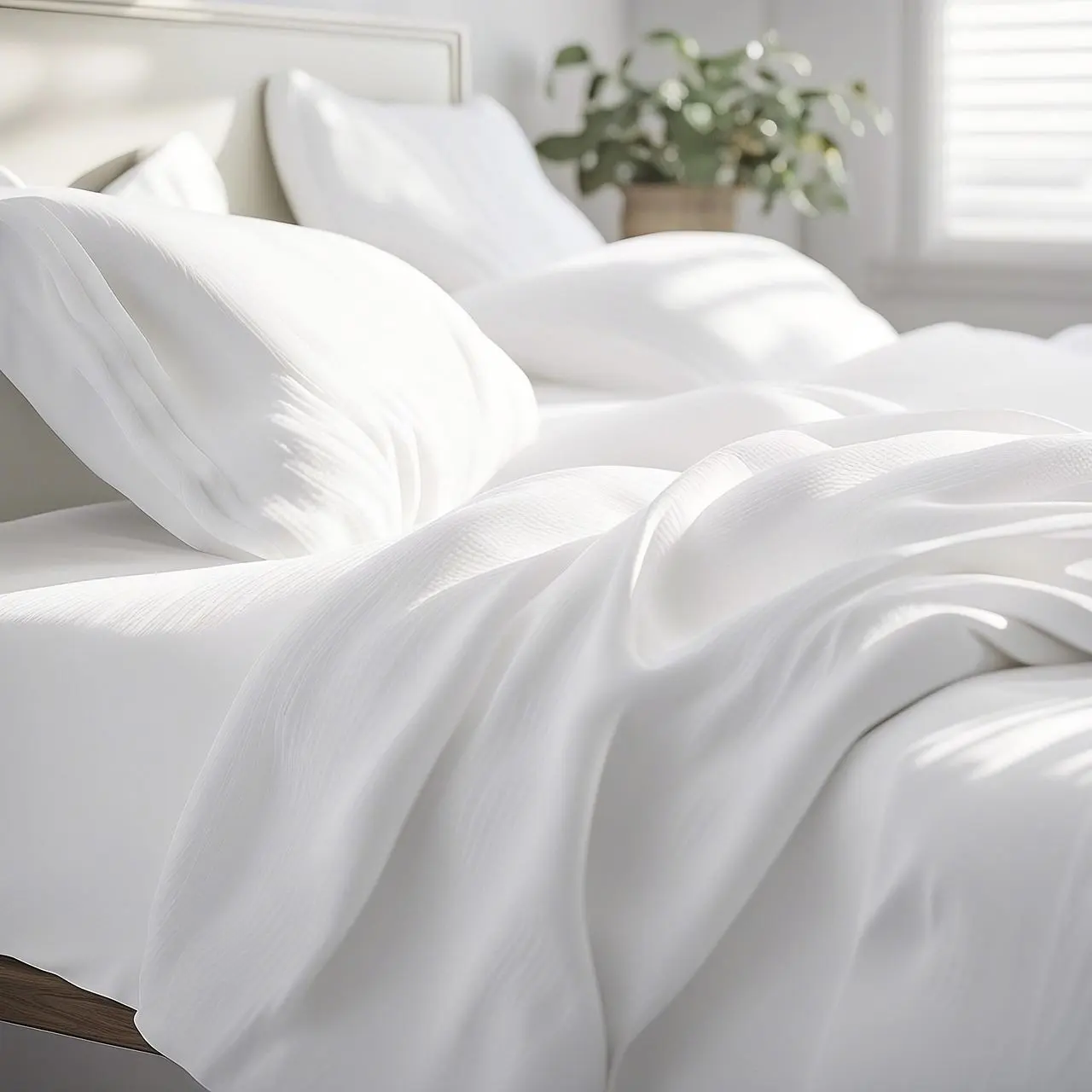
Bedding deserves its own rules. The Alberta guide recommends dust-proof covers for pillows and mattresses made from a tight-weave fabric, plus washing bedding, pillowcases and mattress covers in hot water every week (source).
Humidity matters too. According to MyHealth Alberta, dust mites do well where humidity is greater than 50% but struggle in dry conditions. Plants and fish tanks add moisture, so keep them out of the bedroom.
Dust control is one piece of a better night. The guide to the best bedroom temperature for sleep covers the climate side of the same room. If you are clearing clutter anyway, the guide on how to make bedroom relaxing has ideas for a calm room with fewer dust catchers.
Keep dust out of the air you breathe
Cleaning handles what has landed. These steps limit what floats in and what you add yourself:
- Furnace filter: State Farm says changing it every few months helps combat house dust, and that pleated or electrostatic filters trap dust better than fiberglass.
- Air cleaner: MyHealth Alberta says a HEPA air cleaner can help remove some allergens, such as pollen or pet dander, and tobacco smoke from home air.
- Windows: MyHealth Alberta advises against window or attic fans and suggests air conditioning so you can keep windows shut, while Consumer Reports says opening windows is an easy way to exchange indoor and outdoor air when it is not too cold and the pollen count is not too high.
- Candles and incense: Harvard reports a sharp increase in airborne particles in homes where they burn.
- Fireplaces: the same Harvard page says to keep the flue open for 12 hours after the fire has gone out.
The window advice conflicts, so match it to your climate and your allergies. On high-pollen days, closing up and running the air conditioning is the safer bet.
A simple weekly dust routine
Frequency depends on your household. MyHealth Alberta suggests damp-mopping hard floors once a day, which is a lot for most homes, while State Farm says to vacuum at least once a week and twice a week in high-traffic areas.
Here is a routine you can scale up or down:
- Pick up clutter and move small decor so you can wipe underneath it.
- Damp-dust from top to bottom: shelves, ledges, vents, baseboards and electronics.
- Vacuum slowly with a HEPA machine, including under furniture and along edges.
- Strip the bed and wash the sheets and pillowcases on a hot cycle.
- Damp-mop hard floors last, so the settled dust gets picked up.
- Empty the vacuum and check its filter before you put it away.
Frequently asked questions
Can an air purifier replace dusting?
Show answer
No. A purifier only works on particles that are floating, while dust that has already settled on floors and sofas keeps getting stirred back up, as the Harvard guide describes. Wiping and vacuuming still do the heavy lifting.
Should I wear a mask while cleaning?
Show answer
It helps if you are sensitive. MyHealth Alberta notes that dusting and vacuuming make the air worse until the dust settles, and suggests having someone without allergies do the cleaning when possible.
Are sprays that kill dust mites worth buying?
Show answer
Probably not. The Alberta guide says you can buy chemicals called ascaricides, but many experts do not consider them effective enough to justify the trouble and expense (source). Hot-washed bedding and lower humidity are cheaper levers.
Do houseplants help with dust?
Show answer
The evidence is thin. State Farm says no definitive tests have been performed, though researchers believe plants may help, and MyHealth Alberta points out that plants add humidity, which is a reason to leave them out of the bedroom.