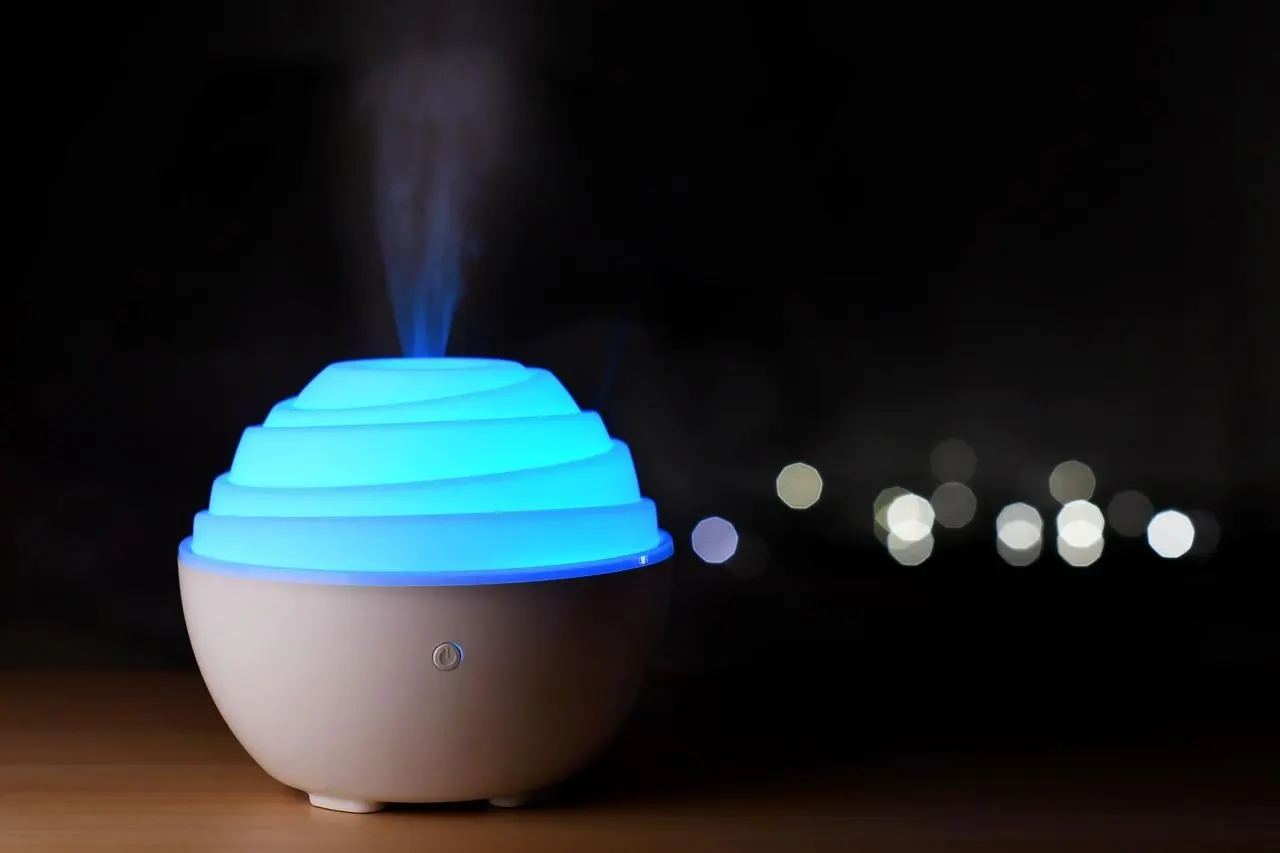
Are essential oil diffusers safe to run at home? Not risk-free: they release VOCs, so use extra caution if you have asthma or young children, and ask a clinician first.
This guide is part of our home wellness series on everyday habits that shape how your home feels and how you breathe in it.
| Item | What the sources say |
|---|---|
| Published studies on diffused oils and asthma | None specifically, per the AAAAI answer |
| Released by lavender, eucalyptus and tea tree oil | Terpenes, toluene and benzene, among other VOCs |
| Terpene associations | Nocturnal breathlessness and bronchial hyperresponsiveness |
| Use around young children | Most pediatric providers do not recommend it, per AprilAire |
| Oil label accuracy | No way to tell if the contents match the label, per AprilAire |
These points come from the AAAAI Ask the Expert answer and an AprilAire blog post. Guidance can change, so check the sources before you rely on them.
What a diffuser actually puts into your air
Essential oils smell natural, but diffusing them means evaporating chemicals into the room you breathe in. The AAAAI answer was written by two doctors from Massachusetts General Hospital and Harvard Medical School, and it points to published data on volatile organic compounds (VOCs) released by diffused oils. Those data came from studies published in 2007 and 2009, according to the AAAAI.
The studies found that diffused lavender, eucalyptus and tea tree oils released several compounds into the air:
- Terpenes
- Toluene
- Benzene, along with other VOCs
AprilAire’s blog adds that a study once found some oils and diffusers emit VOCs ranging from ethanol to acetone. AprilAire sells air-quality equipment, so read its post as a vendor’s summary, and give more weight to the allergy specialists’ answer. You can see both in the AprilAire post.
Why asthma calls for extra caution
The AAAAI answer is candid about a gap: it says there are no published studies specifically examining diffused essential oils and asthma. That is a gap in the evidence, not proof that diffusers are harmless. The same AAAAI page goes on to explain why it still advises care.
It cites a 1995 study that associated terpenes with more nocturnal breathlessness, bronchial hyperresponsiveness and peak expiratory flow variability. That link held for people with and without asthma. The answer also notes anecdotal reports of respiratory symptoms in both groups after various diffused oils.
The reasoning is simple. A hallmark of asthma, especially when it is poorly controlled, is bronchial hyperactivity, where airborne irritants can trigger bronchospasm. Given that, the AAAAI authors recommend that patients exercise caution with diffusers.
Babies and young children
AprilAire says most pediatric providers do not recommend diffusers around young children, especially babies. The post ties that advice to the VOCs diffusers can emit. Treat it as a reason to ask first rather than a rule from a medical body.
Before you diffuse to address any health concern for a child, the post says to consult your child’s provider. It also lists chemical burns, allergic reactions and respiratory issues among the side effects that can come with essential oils. You can read this in the AprilAire post.
Do diffusers improve air quality?
AprilAire states there is no evidence that diffusers have a positive impact on indoor air quality. Because that claim comes from a company that sells whole-house air products, it is worth weighing carefully. Still, nothing in the AAAAI answer suggests a diffuser cleans your air either.
There is also a labeling problem. The AprilAire post says oil contents and quality are not regulated or monitored by any governing agencies, so there is no way to tell whether a bottle matches its label. That makes it hard to know what you are actually vaporizing.
If what you really want is more comfortable air, start elsewhere. Dry air is a moisture problem, and our guide to the ideal indoor humidity level is a better first stop than a scent.
How to lower your risk
The sources do not give a safe dose, so these steps are a cautious reading of what they do say:
- If you have asthma, talk to your clinician before you start, and skip the diffuser if in doubt.
- Keep diffusers out of babies’ and young children’s rooms unless their provider says otherwise.
- Do not assume a bottle contains what the label claims.
- Stop using it if anyone in the home develops coughing, wheezing or breathlessness.
- Do not rely on a diffuser as an air-cleaning tool.
If you are tempted to run one while you sleep, remember that terpenes were tied to breathing problems at night. For a gentler way to improve your bedroom, see our guide to the best bedroom temperature for sleep.
Frequently asked questions
Can a diffuser trigger asthma symptoms?
Show answer
It may. The AAAAI notes that airborne irritants can set off bronchospasm in people with asthma, and it recommends caution with diffusers. Ask your own clinician about your situation.
Are essential oils safe just because they are plant-derived?
Show answer
A plant origin does not settle the question. According to the AAAAI, diffused oils give off compounds such as toluene and benzene, and some of those have been linked to worse asthma symptoms.
Is it okay to diffuse near a baby?
Show answer
AprilAire reports that most pediatric providers advise against it for young children, babies in particular. Check with your baby’s provider before deciding.
Do studies prove diffusers cause harm?
Show answer
Not directly. The AAAAI authors found nothing that tests diffused oils against asthma outcomes, and they base their caution on VOC data and reported symptoms instead.